Examining Who Wields Magical Power Within The Legend of Zelda’s Main Characters
Picture this: You are an ambitious university student in a popular culture & politics course that allows you to choose to research a social science topic of your choice on a popular culture topic of your choice.
You have a million and one ideas for different fandoms you are in.
Do you analyze the political themes of The Hunger Games? Explore the social commentary hidden within your favourite television series?
Then you remember the fictional world that has had you in a chokehold since the first time you ever touched a video game console: The Legend of Zelda.
I continued working on this project through my undergraduate degree and after Echoes of Wisdom came out. But no matter how hard I tried, there was never enough time to run through ALL the research I had.
My research project primarily focused on gender representation within the series. But alongside that line of research, I found something equally interesting.
Magic.
Specifically, how magic and gender intersect within The Legend of Zelda.
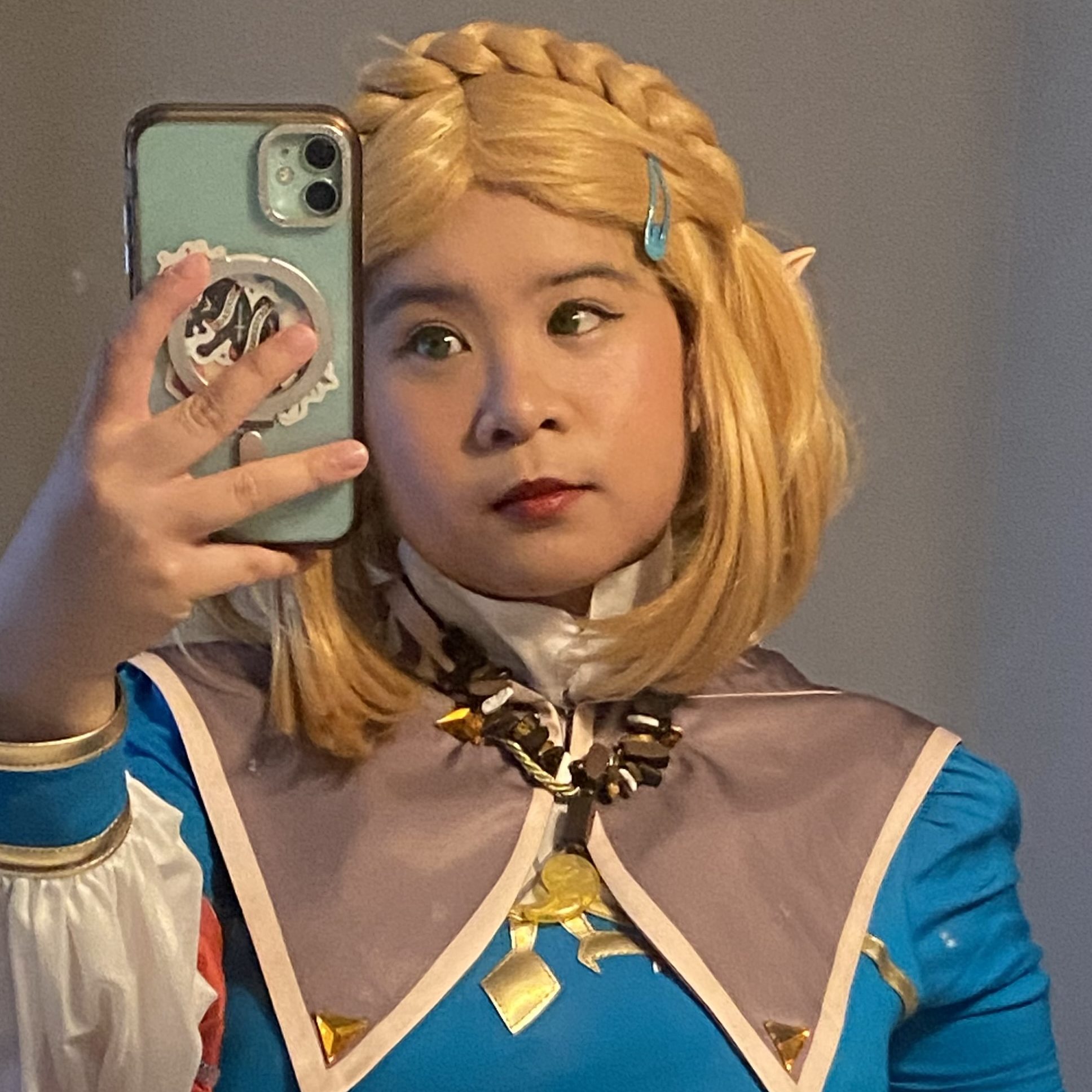
My Approach
Instead of analyzing just one game, I examined the entire mainline Legend of Zelda series from 1986 (The Legend of Zelda) to 2024 (The Legend of Zelda: Echoes of Wisdom).
I focused exclusively on Nintendo’s officially recognized main titles while excluding spin-offs like Hyrule Warriors or Cadence of Hyrule. This creates a consistent body of work spanning almost four decades of storytelling.
Additionally, I focus only on the main characters of the series: the hero, the antagonist(s), the victim, and the companions. This resulted in a dataset of 123 characters across 21 games.
For this project, I focus on magical roles. I ask questions such as:
- Which characters possess innate magical abilities?
- Are magic users portrayed as a wielder, an entity or something else correlated to magic?
- Do male and female characters wield magic for different purposes?
Rather than counting spells or magical attacks, this analysis examines what magic represents within the narrative. For this reason, gameplay aspects of magic (e.g., the magic bar in games like Ocarina of Time, Link’s abilities in Tears of the Kingdom) are not featured unless they are evident in an analyzed cutscene of main characters.
I acknowledge that, for this reason, there may be some characters counted as non-magic users while they COULD be considered. For the sake of argument, however, let’s say, for example, Link in Tears of the Kingdom’s powers are not quite his own; they are borrowed from Rauru, so he still does not possess real magic on his own. Plus, he loses those abilities at the end of the game (spoiler warning) after saving Zelda, so does he really have magic? I’ll let you, the readers, decide.
So… Who actually Uses Magic?
Before collecting the data, I had my own assumptions.
Zelda, canonically coming from the Goddess’ bloodline, would dominate the list of magic users. Ganondorf would probably come in second. Link? He probably relies on magical items more than magic itself. And having played the games, I assumed most females would be magic users.
My research of the 123 main characters resulted in the following data:
- Out of 46 females, 29 are innate magic wielders.
- All eight ungendered characters are magical entities.
- Among innate wielders, females are primarily victims.
- Among magical entities, the majority are primarily male antagonists.
Yeah, Magic IS Gendered…
One of the original questions behind this research was if magic itself is gendered. The answer is, unsurprisingly, yes.
Female characters are more frequently associated with innate magical abilities; however, that magic is commonly portrayed as nurturing, restorative, prophetic or sacred. Zelda’s powers in Breath of the Wild, for example, explicitly focus on sealing away the main antagonist, Calamity Ganon.
Male magic users, meanwhile, appear more polarized.
They are either exceptionally powerful villains who seek dominion over the world through magic, or ordinary heroes who possess almost none of it.
There are certainly exceptions, but the overall trend is rather consistent throughout the series.
What Does This Mean?
Well, nearly two-thirds of the female characters possess magical abilities. This suggests that women are more likely to be defined by supernatural power than physical prowess.
However, considering many of these magical women are also victims, it suggests that possessing power does not necessarily mean controlling one’s own narrative. Rather than granting autonomy, magic often places female characters in positions where they must be protected, rescued, or sacrificed for the greater good.
In contrast, male magic is more closely tied to power and domination.
If most male magic users are antagonists in the story, then male magic serves a very different narrative purpose: male magic focuses on conquest, corruption, destruction and political domination.
This creates an interesting contrast:
Female Magic:
- Sacred
- Restorative
- Protective
- Vulnerable
Male Magic:
- Corrupting
- Destructive
- Dominating
- Threatening
The ungendered category is the most fascinating to me.
If all eight ungendered characters are magical entities, this suggests the series often places non-human beings outside the gender binary.
Altogether, these patterns indicate that the games are less concerned with WHO has magical power than with HOW that power is narratively framed. Magic then becomes a storytelling device that reinforces distinct gendered roles rather than distributing agency equally across characters.

Leave a comment